
We are excited to begin our campaign for the 2025 Rockland Music Fest!

Paragraph
Paragraph
Read more about RocklandWeb Gears Up for Digital Media Campaign for Rockland Music Fest
We are excited to begin our campaign for the 2025 Rockland Music Fest!
Paragraph
Paragraph
Read more about RocklandWeb Gears Up for Digital Media Campaign for Rockland Music Fest

By Tom Ossa, CEO – RockWeb Systems Inc.
When I started out in web development over 20 years ago, it was like the wild west.
There were no standards. Just a few name brand companies such as GoDaddy, Network Solutions and Macromedia (which Adobe bought), and a lot of noise on how to do things right.
In the early days, like any wild west atmosphere – it was a struggle. I found myself finding a variety of ways to do things the right way, and I aimed my companies to stick with the best practices. But that doesn’t mean that our customers always bought into my concepts. Quite frankly, I left a LOT of money on the table, trying to educate the masses. Eventually, I settled in and decided to focus on our best clients – big and small – and let the rest go. It was more peaceful.
Over time, those name brand companies, and much of our custom web design processes, became more streamlined and to the point. The past five years (especially during COVID) we were able to – for lack of a better term – “commoditize” the basics of our process, and automate it. We set a price point, and adhered to the standards that we already knew were best practices.
Well, ladies and gentlemen…the Wild West is back. In the form of AI.
In the tech world, when a product becomes so common that it’s no longer a special advantage, it’s called “commoditization”. This is starting to happen with artificial intelligence (AI), much like it happened with personal computers and websites. Initially, creating a website was a big deal, offering a significant edge over competitors. But as tools and platforms became more user-friendly and accessible, almost every business ended up with a website. Today, having a website doesn’t set you apart—it’s just expected.
AI is nowhere near being a commodity yet. But it’s inching closer – and faster. It will be expected, in just about everything we do.
Much like those early days of web development, I feel it’s important to get in early – so that when ChatGPT, Claude, and other systems become the standard, you are in place to capitalize on them.
AI is also becoming more common and affordable, making it easy for any business to use. This shift means that AI might soon be as everyday as having a website. Just as the early days of the internet brought e-commerce, which evolved from a luxury to a standard way of shopping, AI is moving from being a buzzword to a regular part of business operations.
Experts like Nicolas Carr and others from the Harvard Business Review suggest that while AI can give businesses a temporary edge, this advantage won’t last, as more companies adopt AI. The key to standing out won’t just be about having AI but how creatively it’s used.
In short: The real winners will be those who use AI to innovate and improve their services or products uniquely.
Today, many companies use AI mainly to save time and money. I know I do. However, its role is expanding, and soon, AI will work quietly in the background, making businesses more efficient without much fanfare. This is similar to how, after the novelty wore off, websites became just another tool for business. They’re essential but not something that customers explicitly notice or businesses boast about.
AI is already blending into the background in many ways. It’s in the search and social algorithms that recommend what shows to watch, help track deliveries, or suggest the fastest driving routes. In healthcare, AI helps diagnose diseases like cancer more accurately and quickly. These uses are becoming so common that we take them for granted, much like how we do with websites.
AI is on a path from being a cutting-edge technology to a standard tool that businesses will eventually take for granted. Just like websites, the challenge for businesses won’t just be to use AI, but to use it in innovative ways that truly make a difference. Especially when it fades out of daily view.
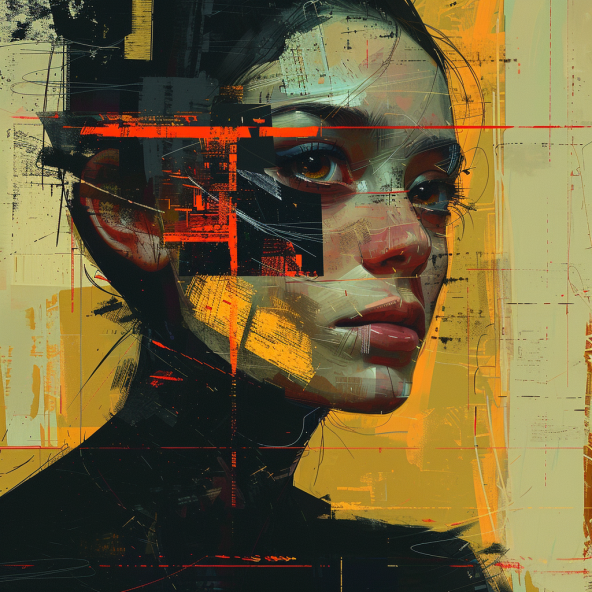
When OpenAI introduced DALL-E 2 on April 6, 2022, it was more than just a technological marvel—it was a moment that captured the imaginations of many, signaling a new era in artificial intelligence. The ability of a computer to create strikingly realistic images from textual descriptions was something many hadn’t anticipated, sparking a blend of awe and ethical debates that continue to resonate in the AI community.
Recently, OpenAI announced the cessation of new customer purchases for DALL-E 2 generation credits, effectively phasing out the service in favor of its more advanced successor, DALL-E 3.
This transition marks the end of a significant chapter in AI development. DALL-E 2, although revolutionary at its inception, was bound to be eclipsed by the continual advancements in technology, such as the improved detail and editing capabilities found in DALL-E 3.
The initial launch of DALL-E 2 not only showcased the possibilities of AI but also formed a community of artists and tech enthusiasts who explored these new tools together. Illustrators and visual artists found the AI’s capabilities liberating, allowing them to experiment in ways previously unimaginable. They described the experience as opening a portal to infinite creative possibilities, despite the occasional imperfections in the AI’s outputs, which added a dreamlike quality to the images.
Then, bureaucracy got in the way. And the features that were so liberating in version 2 – were adjusted. Apparently for the betterment of mankind. But, I digress.
The journey through AI-generated art wasn’t just about creating images—it was about exploring ‘latent space,’ a concept referring to the multi-dimensional realm where all possible images the AI could generate reside. Most people think two or three dimensionally. Some gifted few think four-dimensionally. DALL-E-2 felt like the 5th dimension, for a while.
Early users, or as they were called – ‘latent space astronauts,’ navigated this space through prompts that acted like coordinates, unlocking new visual forms and ideas.
However, the ascent of DALL-E 2 and similar technologies wasn’t without controversy.
The use of massive datasets, often scraped from the internet without explicit permission from the original creators, raised significant ethical questions. These concerns grew as more people became aware of the implications of AI’s capabilities, including the potential to replicate and monetize the styles of living artists without compensation.
That’s when bureaucracy’s greater good narrative began to seep in. Like the wild west of the 1990’s and 2000’s dot-com boom, the word got out. And not only did people see dollar signs, they also saw liabilities over the horizon.
The debates and discussions that followed were polarized—some celebrated the technological achievements and creative potential, while others pointed out the ethical dilemmas and the potential impacts on artists’ livelihoods. The conversation about AI and creativity became a reflection of broader concerns about technology’s role in society and the need for responsible innovation.
As we say goodbye to DALL-E 2, we reflect on its impact and the conversations it started. The technology pushed the boundaries of what’s possible, brought together a community of creative minds, and sparked a dialogue about the future of art and AI ethics.
As new technologies like DALL-E 3 and others continue to evolve, they carry with them the lessons learned from their predecessors, promising even greater capabilities while also reminding us of the ongoing need for thoughtful consideration of their broader impacts.
In this transition, us geeks and early adopters are witnessing not just the sunset of a technological tool, but the ongoing evolution of a field that continues to challenge our expectations and expand our horizons.
Let’s just hope it doesn’t end up like the World Wide Web did.

This article was written in part by Tom Ossa, and further inspired with AI. Original version is at Ars Technica, a fantastic source of information for tech geeks like myself. If you wish to discuss this or have any other questions, contact us. Thanks for reading.
~ Tom
Every year since 2009, I do a small webinar or workshop, called “The State of the Web Address”. I usually time the announcement right after the State of the Union Address.
(Mainly because I figure the day after, you need a break from all the political back and forth.)
This 15 year anniversary edition will be a special one. We’ll be talking about AI – and how to use it to enhance your productivity on your daily tasks by anywhere from 10% to 80%. (Results vary, per industry)
We’ll discuss several of the leading AI platforms: ChatGPT, Midjourney, Bard and Claude. And we’ll be peppering in stories from our industry colleagues – including how it can be used to save you considerable money and time, and potentially enhance your career.
We will also discuss several pitfalls of using AI, along with some advice to be responsible in your usage.
To register for this free webinar, sign up below.
In yet another groundbreaking update, OpenAI has unveiled a feature that revolutionizes the way users interact with ChatGPT, introducing the ability to integrate custom personalities, or “GPTs,” into any conversation. This enhancement, announced on Tuesday, transforms the ChatGPT platform into a dynamic workspace where AI agents, each with specialized expertise, collaborate seamlessly.
The introduction of custom GPTs marks a significant leap forward in AI collaboration. Users can now invoke these personalized AI assistants using the “@” symbol, integrating them into discussions without losing the conversational context.
This means that whether you’re seeking advice from a Wellness Guide on health-related questions or consulting a Canine Health Advisor for your pet’s wellbeing, the transition between GPTs is smooth and intuitive.
OpenAI’s vision for GPTs extends beyond mere convenience. By allowing users to create and share custom GPTs through the GPT Store, OpenAI has opened the doors to a new level of customization and expertise.
Imagine seamlessly switching between a marketing expert and a technical advisor, all within the same conversation thread. This feature is not just an enhancement; it’s a new way of interacting with AI, enabling a form of teamwork that was previously unimaginable.
The real-world applications of this technology are vast. From drafting ad copy with a specialized GPT to refining it with an editor GPT, the potential for efficiency and creativity is limitless. Moreover, this feature hints at a future where AI agents could work together autonomously, tackling complex tasks with a level of collaboration and intelligence that mirrors human teamwork.
At Rockland.AI, we recognize the transformative potential of OpenAI’s latest feature. We’ve embraced this innovation by offering custom GPT personal assistant setup services. Whether you’re a business looking to streamline operations or an individual seeking to optimize your daily routine, our team at RocklandWeb.com is ready to tailor an AI assistant that perfectly fits your needs.
For just $129, you can harness the power of custom GPT personal assistants, designed to integrate seamlessly into your workflow. This is not just an investment in AI technology; it’s an investment in the future of productivity and collaboration.
I am really excited about this new feature, first reported by Ars Technica.
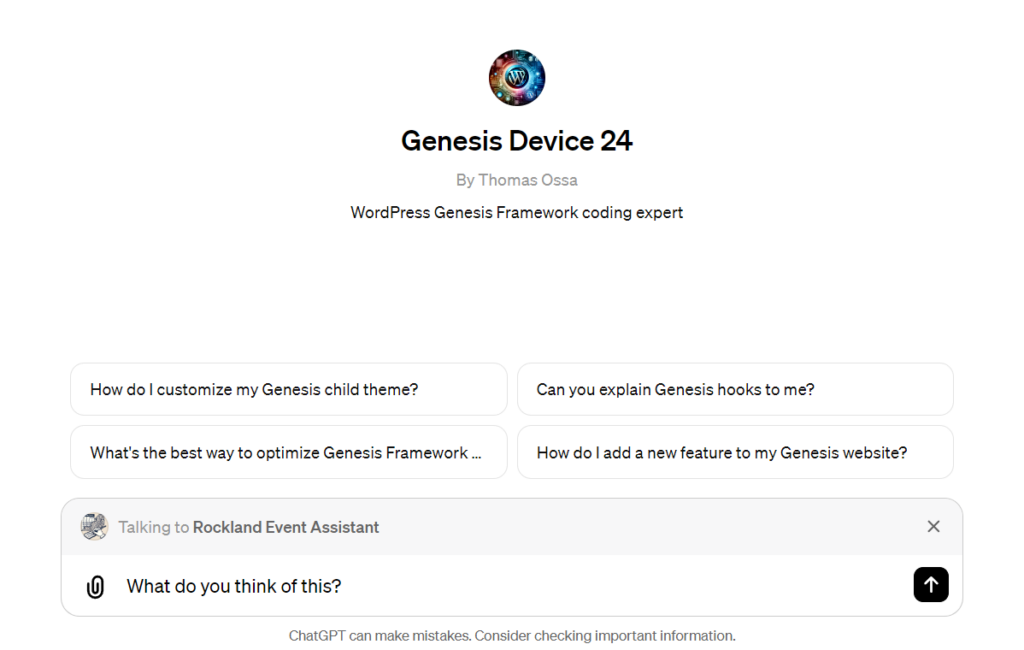
OpenAI just added a cool new thing to ChatGPT that lets you bring in special AI helpers into your chat using the “@” sign. It’s like adding experts to your conversation without having to start over or lose track of what you were talking about. This new trick makes it easier to work with different AI helpers at once, almost like they’re a team working together in the ChatGPT app.
Before, if you wanted to switch between different AI helpers to get different kinds of help, you had to copy your conversation, start a new chat, paste it in, and explain everything all over again. Now, you can just stay in one chat, use the “@” sign to bring in any helper you need, and keep the conversation going smoothly.
For example, OpenAI made two helpers: one that knows a lot about human health and another that knows about dog health. So, if you’re talking about food poisoning in people and then need advice for your dog, you can switch between these two helpers easily without starting a new chat.
This feature is super handy because it lets you talk to an AI that writes ads and then switch to an AI that checks your writing, all in the same chat. Each helper has its own special skills and knowledge, but ChatGPT remembers everything you said, even when you switch helpers.
This new update is a small step towards a future where AI helpers can work together like a team to help you out in more complex ways. OpenAI has been careful about making ChatGPT act like a bunch of separate helpers instead of one big one, but this new feature shows they’re starting to explore how these AI helpers can work together better.
If you are interested in learning more, contact us! In the future, we will be building more bots, personalized to your needs!